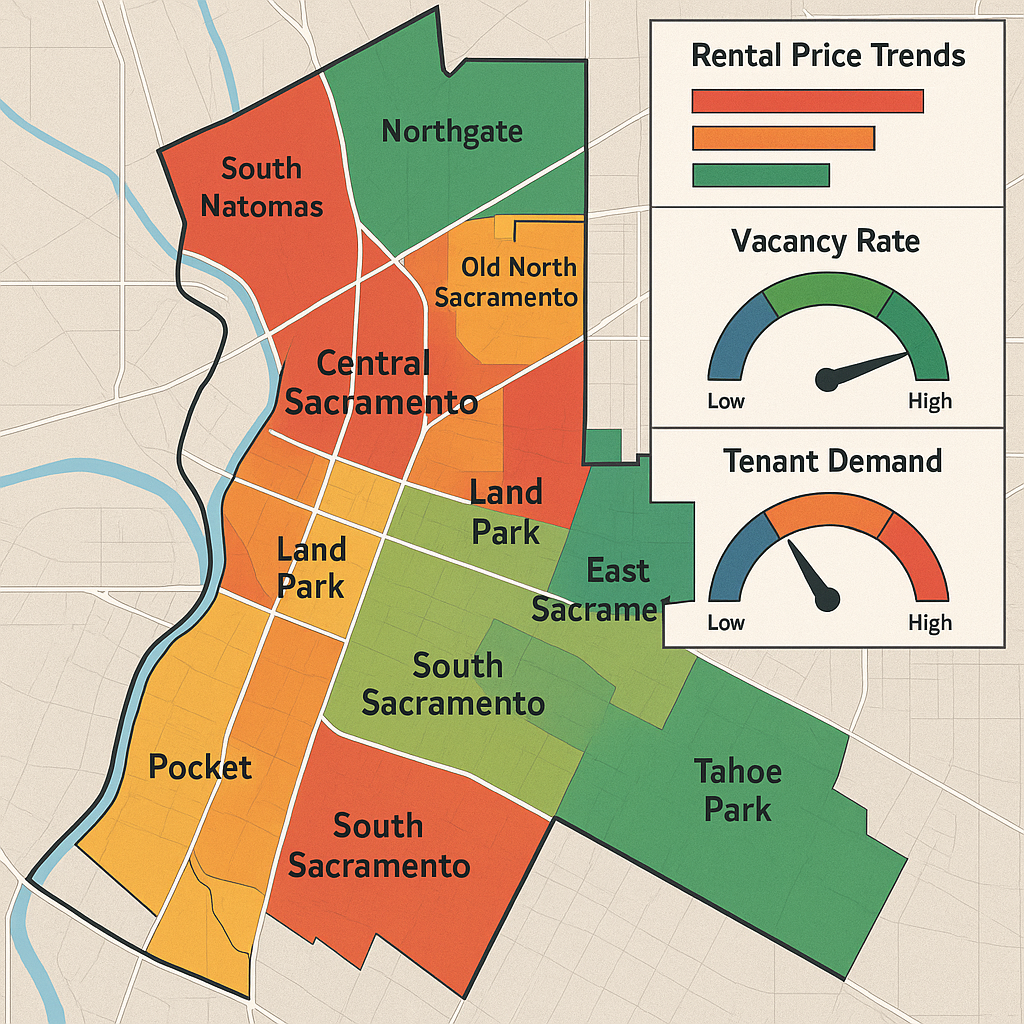
Sacramento's rental market varies dramatically by neighborhood—discover which areas deliver the highest returns, lowest vacancy rates, and strongest tenant demand for informed investment decisions.
Downtown and Midtown Sacramento: Urban Core Rental Dynamics
Downtown and Midtown Sacramento represent the urban core's most dynamic rental markets, characterized by dense residential development, proximity to government employment centers, and evolving tenant demographics. These neighborhoods command premium rental rates driven by walkability, transit access, and proximity to entertainment districts. Average rental yields in Downtown Sacramento range from 5.2% to 6.8%, with one-bedroom units averaging $1,850 to $2,200 monthly and two-bedroom units commanding $2,400 to $3,000. Midtown properties typically achieve slightly higher occupancy rates due to established neighborhood character and superior amenities.
Vacancy rates in the urban core demonstrate seasonal volatility, typically ranging from 4.5% to 7.2% depending on new construction absorption rates and employment trends within state government sectors. The tenant profile skews toward young professionals, state employees, and graduate students seeking reduced commute times and urban lifestyle amenities. Investor considerations must account for higher property insurance costs, potential parking constraints, and stricter municipal code enforcement compared to suburban markets. Properties featuring modern finishes, in-unit laundry, and secure parking command significant rent premiums and demonstrate measurably lower turnover rates.
Market performance indicators suggest that Downtown and Midtown properties require active management strategies focused on tenant retention and proactive maintenance protocols. The concentration of rental inventory creates competitive pressure on pricing, necessitating strategic positioning through superior property condition and responsive service delivery. Investors achieving optimal returns in these markets typically maintain occupancy rates above 94% through tenant-focused management approaches and timely capital improvements that preserve competitive positioning within dense rental supply environments.
East Sacramento and Land Park: Premium Residential Market Performance
East Sacramento and Land Park constitute Sacramento's premier residential rental markets, distinguished by historic architecture, tree-lined streets, and proximity to McKinley Park and William Land Park. These neighborhoods consistently deliver superior tenant quality, extended lease durations, and rental rate stability that outperforms metropolitan averages. Single-family rental properties in East Sacramento command $2,800 to $4,500 monthly, while Land Park properties range from $2,600 to $4,200, reflecting lot sizes, architectural character, and school district quality. Rental yields typically range from 4.8% to 6.2%, with appreciation potential offsetting slightly compressed cash flow compared to emerging markets.
Vacancy rates in these premium markets remain exceptionally low, typically between 2.8% and 4.5%, driven by limited inventory turnover and strong tenant demand from established families and professionals prioritizing neighborhood stability and educational quality. The tenant demographic skews toward higher-income households with extended residency intentions, resulting in average lease durations exceeding 24 months compared to the metropolitan average of 14-16 months. This stability translates directly to reduced turnover costs, minimized vacancy loss, and predictable cash flow performance that appeals to conservative investment strategies and portfolio stabilization objectives.
Investment positioning in East Sacramento and Land Park requires capital allocation toward property acquisition at premium entry points, balanced against reduced operational volatility and superior tenant retention metrics. Properties demonstrating original architectural character combined with modernized systems and finishes achieve the strongest market performance. Investors must account for higher maintenance standards expected by premium tenants and potential historic preservation requirements in designated districts. However, the combination of tenant quality, lease stability, and long-term appreciation potential positions these neighborhoods as core holdings for investors prioritizing portfolio quality over maximum cash-on-cash returns.
Natomas and North Sacramento: Growth Corridors and Emerging Opportunities
Natomas and North Sacramento represent Sacramento's primary growth corridors, offering investors emerging opportunities characterized by new construction absorption, infrastructure development, and evolving demographic patterns. Natomas, particularly South Natomas near Sacramento International Airport, has experienced substantial residential development over the past decade, creating concentrated rental inventory with modern construction standards and master-planned community amenities. Rental rates for single-family properties range from $2,200 to $3,200 monthly, while townhomes and condominiums command $1,800 to $2,500, delivering rental yields between 6.5% and 8.2% depending on acquisition timing and property condition.
North Sacramento presents a more diverse investment landscape, encompassing established neighborhoods undergoing revitalization alongside areas demonstrating persistent affordability challenges. Vacancy rates across these growth corridors range from 5.5% to 9.2%, reflecting new construction absorption cycles and tenant turnover associated with more transient demographic profiles. Investor strategies must incorporate thorough submarket analysis, as performance metrics vary significantly across specific neighborhoods within these broader geographic designations. Properties within established Natomas subdivisions with homeowners association amenities demonstrate measurably superior occupancy rates and tenant retention compared to older North Sacramento inventory requiring capital improvements.
Strategic positioning in these growth corridors requires active market monitoring and responsiveness to infrastructure developments, employment center expansions, and municipal planning initiatives. The completion of transit improvements and commercial development projects can materially impact rental demand and rate trajectories within specific submarkets. Investors achieving optimal performance typically employ proactive tenant screening protocols, implement preventive maintenance schedules that reduce turnover-related costs, and maintain competitive positioning through property condition and responsive management. These markets offer compelling opportunities for investors with operational capabilities to navigate higher tenant turnover and capitalize on appreciation potential associated with continued regional growth and development.
Elk Grove and South Sacramento: Suburban Rental Market Analysis
Elk Grove and South Sacramento constitute Sacramento's primary suburban rental markets, characterized by single-family home predominance, family-oriented demographics, and school district quality as primary demand drivers. Elk Grove, as one of California's fastest-growing cities over the past two decades, offers substantial rental inventory ranging from established neighborhoods to recent master-planned developments. Single-family rental rates typically range from $2,400 to $3,500 monthly, with rental yields between 6.0% and 7.5% depending on property age, condition, and specific school attendance zones. South Sacramento presents more diverse investment profiles, with rental rates ranging from $1,800 to $2,800 and yields potentially reaching 7.5% to 9.0% in select submarkets.
Vacancy rates in Elk Grove typically range from 4.2% to 6.5%, demonstrating relative stability driven by family tenant profiles with extended residency patterns and strong employment fundamentals. South Sacramento experiences more variable vacancy performance, ranging from 6.0% to 10.5% depending on specific neighborhood characteristics and property condition relative to competing inventory. Tenant demographics in Elk Grove skew toward families with school-age children, dual-income households, and residents employed in healthcare, education, and professional services sectors. This demographic profile translates to longer average lease durations, typically 18-22 months, and lower incidence of lease violations compared to urban core markets.
Investment strategy differentiation between Elk Grove and South Sacramento requires careful submarket analysis and property-level due diligence. Elk Grove properties within highly-rated school boundaries command premium rents and demonstrate superior tenant retention, while properties in average-performing school zones face increased competitive pressure. South Sacramento offers value-oriented investment opportunities with higher yield potential, but requires more intensive property management, proactive maintenance protocols, and sophisticated tenant screening to mitigate turnover risk and maintain occupancy performance. Investors successfully navigating these suburban markets typically emphasize property condition maintenance, responsive service delivery, and strategic positioning relative to school quality and employment center proximity to optimize occupancy rates and minimize vacancy loss.
Strategic Portfolio Positioning Across Sacramento Rental Markets
Effective portfolio construction across Sacramento's diverse rental markets requires strategic allocation aligned with investment objectives, risk tolerance, and operational capabilities. Sophisticated investors typically employ geographic diversification strategies that balance premium markets offering stability and tenant quality against emerging markets delivering higher yields and appreciation potential. A balanced Sacramento portfolio might allocate 30-40% to premium markets like East Sacramento and Land Park for stability and tenant retention, 30-40% to growth corridors like Natomas and Elk Grove for yield optimization, and 20-30% to urban core properties for diversification and exposure to young professional demographics.
Performance optimization across diverse markets necessitates differentiated management approaches tailored to specific neighborhood characteristics and tenant profiles. Premium market properties require elevated maintenance standards and amenity positioning to justify rate premiums and retain quality tenants. Growth corridor and suburban properties benefit from proactive preventive maintenance protocols that reduce turnover costs and systematic tenant communication that enhances retention. Urban core properties demand responsive management and strategic positioning relative to dense competitive inventory. Investors lacking internal operational capabilities should prioritize professional property management partnerships with demonstrated local market expertise and tenant retention performance metrics.
Market cycle considerations significantly impact optimal portfolio positioning strategies. During periods of economic expansion and employment growth, growth corridor markets typically deliver superior appreciation and rent growth, justifying increased allocation despite higher operational intensity. During economic contraction or elevated interest rate environments, premium markets demonstrate superior resilience through tenant retention and occupancy stability, providing portfolio ballast against market volatility. Continuous monitoring of market-specific performance indicators—including vacancy rates, days-on-market, rent growth trajectories, and tenant turnover metrics—enables dynamic portfolio positioning that capitalizes on market opportunities while managing downside risk. Investors achieving sustained superior returns across Sacramento rental markets consistently demonstrate disciplined acquisition criteria, proactive asset management, and strategic market timing aligned with local economic fundamentals and demographic trends.
This content is for informational and educational purposes only. It does not constitute an offer or solicitation to buy or sell any security or investment product. Past performance and market trends do not guarantee future results. Consult a licensed financial advisor before making investment decisions. All Inclusive Realty Group, Inc. DRE #02005619.