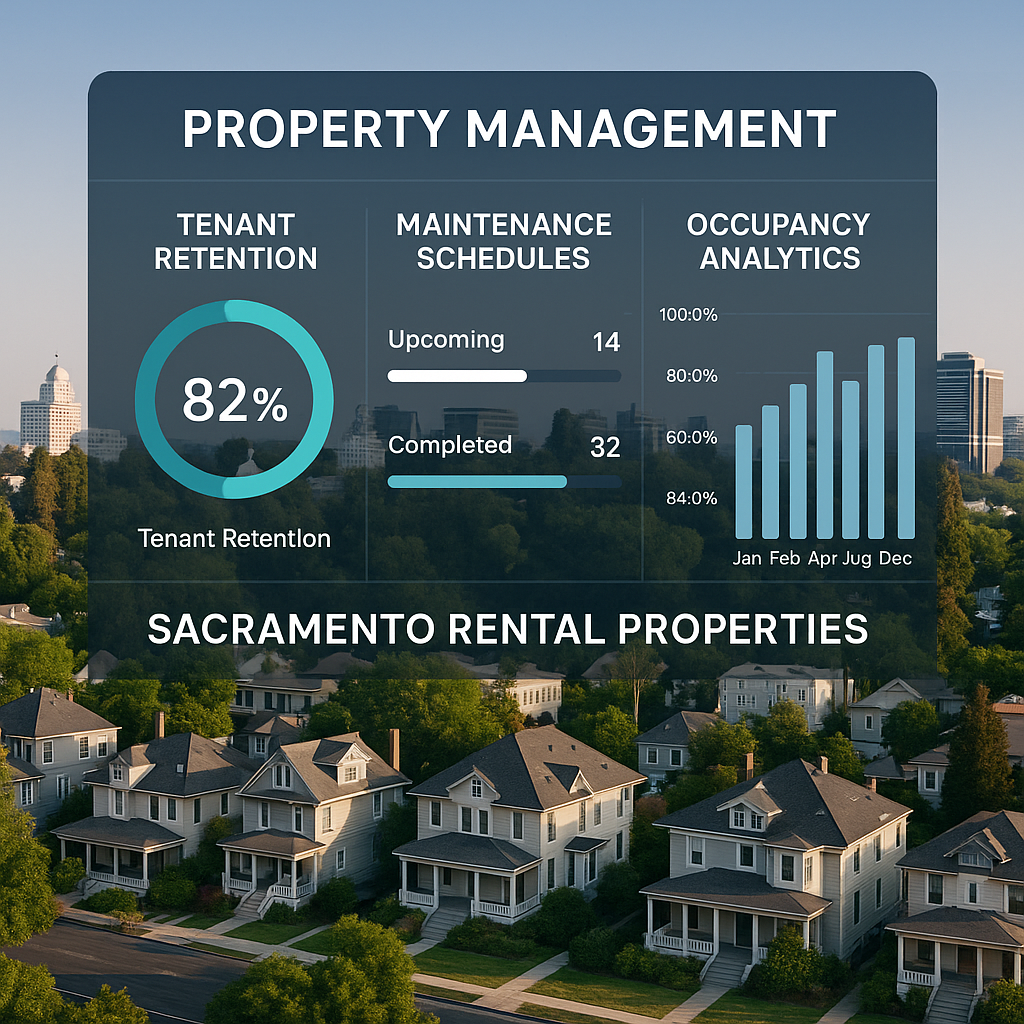
Discover how strategic operational systems and proactive management frameworks drive tenant retention, minimize vacancy loss, and maximize rental income for Sacramento property investors.
Proactive Maintenance Protocols That Prevent Turnover
Tenant turnover represents one of the most significant financial drains on rental property performance, with vacancy loss and turnover costs frequently exceeding two months of rental income per occurrence. Well-managed rental properties distinguish themselves through systematic maintenance protocols that address issues before they escalate into tenant dissatisfaction or property damage. These proactive frameworks include scheduled preventive maintenance inspections, seasonal property assessments, and vendor management systems that ensure rapid response times when maintenance needs arise.
Effective maintenance protocols operate on a tiered system that prioritizes both asset preservation and tenant satisfaction. Quarterly HVAC filter replacements, annual water heater inspections, and biannual gutter cleaning represent foundational preventive measures that extend equipment lifespan while reducing emergency repair frequency. Sacramento property investors who implement documented maintenance schedules experience measurably lower turnover rates, as tenants perceive consistent property care as a reflection of management quality and investment in their living environment.
Technology integration has transformed maintenance management from reactive to predictive. Property management platforms now enable automated maintenance scheduling, digital work order tracking, and tenant portal access for maintenance requests. These systems create accountability through documentation while providing performance metrics that identify recurring issues or vendor inefficiencies. For Sacramento rental property owners, the return on investment from systematic maintenance protocols manifests not only in reduced turnover but also in preserved property values and minimized capital expenditure volatility.
Tenant Communication Systems That Build Long-Term Retention
Tenant retention directly correlates with communication quality and consistency. Properties with formalized communication systems demonstrate retention rates that exceed market averages by 15-25%, translating to substantial reductions in vacancy loss and turnover-related costs. Effective communication frameworks establish clear channels for routine updates, lease administration matters, maintenance coordination, and tenant inquiries while maintaining professional boundaries and response time standards.
Multi-channel communication infrastructure represents best practice in contemporary property management. This includes tenant portals for rent payment and maintenance requests, automated email systems for lease renewals and policy updates, and designated phone lines with documented response protocols. Sacramento property managers who implement these systems report higher tenant satisfaction scores and increased lease renewal rates, as tenants value accessibility and responsiveness as core service attributes.
Strategic communication extends beyond reactive responses to include proactive tenant engagement. Quarterly property newsletters, advance notice of scheduled maintenance, and periodic satisfaction surveys demonstrate management commitment to tenant experience. These touchpoints create opportunities to address concerns before they escalate while reinforcing the value proposition of continued tenancy. For property investors focused on maximizing rental income through retention, systematic communication represents a low-cost, high-impact operational investment.
Documentation protocols within communication systems also provide critical risk management benefits. Recorded interactions, timestamped maintenance requests, and archived correspondence create an audit trail that supports compliance with Fair Housing regulations and landlord-tenant law requirements. This documentation proves invaluable in dispute resolution scenarios and demonstrates professional management standards that protect both property owners and tenants.
Financial Tracking and Rent Collection Workflows
Rental income optimization requires sophisticated financial tracking systems that extend beyond basic rent collection to encompass comprehensive cash flow management, expense categorization, and performance analytics. Well-managed rental properties implement automated rent collection workflows that reduce delinquency rates, minimize administrative overhead, and provide real-time visibility into property financial performance. These systems integrate payment processing, late fee calculation, and delinquency escalation protocols that maintain consistency while preserving tenant relationships.
Contemporary rent collection infrastructure leverages multiple payment channels to maximize convenience and reduce friction in the payment process. Online payment portals, automated clearing house transfers, and mobile payment applications have become standard expectations among quality tenants. Sacramento property investors who offer diverse payment options experience lower delinquency rates and reduced administrative costs associated with manual payment processing. Automated payment systems also generate detailed transaction records that simplify tax preparation and financial reporting requirements.
Financial tracking systems must provide granular expense categorization that enables accurate property-level profitability analysis. Operating expenses, capital improvements, maintenance costs, and vacancy losses require separate accounting treatment to support informed decision-making regarding property performance and portfolio management. Sophisticated property management platforms generate monthly financial statements, budget variance reports, and year-over-year comparative analyses that identify cost optimization opportunities and revenue enhancement strategies.
Rent collection workflows incorporate escalation protocols that balance firmness with fairness in addressing delinquency. Automated late notices, grace period policies, and payment plan procedures create consistency while allowing for reasonable accommodation of temporary tenant financial challenges. These structured approaches reduce the emotional burden of collections while maintaining the financial discipline necessary to protect property cash flow. For Sacramento rental property owners, professional rent collection systems directly impact net operating income and overall investment returns.
Compliance Management and Lease Administration Frameworks
Regulatory compliance represents a critical operational imperative that demands systematic frameworks to navigate the complex intersection of federal Fair Housing requirements, California landlord-tenant law, and local Sacramento ordinances. Non-compliance exposes property owners to substantial legal liability, financial penalties, and reputational damage that far exceeds the cost of implementing proper compliance management systems. Well-managed rental properties maintain documented policies, staff training protocols, and audit procedures that ensure consistent adherence to all applicable regulations.
Lease administration frameworks establish standardized processes for the entire tenancy lifecycle, from application screening through lease execution, renewal, and termination. Compliant screening criteria must be applied uniformly across all applicants, with documented justifications for adverse decisions based on objective financial and rental history factors. Lease agreements require regular legal review to incorporate evolving statutory requirements and case law developments. Sacramento property managers who maintain current lease documents and consistent application procedures minimize legal exposure while demonstrating professional management standards.
Fair Housing compliance demands particular attention given the severe consequences of discriminatory practices. Systematic compliance includes staff training on protected classes, documentation of all tenant interactions, and regular audits of marketing materials and screening decisions. Property management systems should incorporate compliance checkpoints that flag potential Fair Housing concerns before they result in violations. For property investors, robust compliance frameworks protect asset values while supporting ethical management practices.
Security deposit administration represents another compliance-intensive area requiring detailed documentation and adherence to statutory timelines. California law mandates specific procedures for deposit handling, move-in and move-out inspections, itemized deduction statements, and return timelines. Automated systems that track deposit amounts, generate inspection reports, and calculate refund amounts reduce compliance risk while improving operational efficiency. Professional lease administration frameworks transform compliance from a reactive concern into a proactive operational advantage.
Performance Metrics and Data-Driven Decision Making
Data-driven property management represents the evolution from intuition-based decision making to analytical frameworks that optimize financial performance through measurable metrics and comparative benchmarking. Key performance indicators for rental properties include occupancy rates, average days to lease, tenant retention percentages, maintenance cost per unit, rent collection efficiency, and net operating income margins. Sacramento property investors who systematically track these metrics identify performance trends and operational inefficiencies that would otherwise remain obscured within aggregate financial results.
Occupancy and vacancy metrics provide the foundation for revenue optimization analysis. Average vacancy duration, seasonal vacancy patterns, and turnover frequency directly impact annual rental income and should be tracked at the property and unit level. Properties with vacancy durations exceeding market averages require investigation into pricing strategy, property condition, or marketing effectiveness. Conversely, consistently low vacancy rates may indicate below-market pricing that leaves rental income unrealized. Sophisticated investors use vacancy data to inform strategic decisions regarding rent adjustments, property improvements, and lease renewal incentives.
Maintenance and operating expense metrics enable cost management without compromising property condition or tenant satisfaction. Tracking maintenance costs per unit, emergency repair frequency, and vendor performance metrics identifies opportunities for preventive maintenance investments that reduce total cost of ownership. Comparative analysis across portfolio properties reveals outliers that warrant detailed investigation. Sacramento property managers who implement expense analytics report cost reductions of 10-20% through vendor consolidation, preventive maintenance optimization, and strategic capital improvement timing.
Tenant retention analytics provide insight into the effectiveness of property management operations and tenant satisfaction levels. Tracking lease renewal rates, move-out reasons, and tenant tenure patterns enables targeted interventions to address retention challenges. Properties with below-average retention rates incur substantial costs from turnover-related vacancy loss, marketing expenses, and unit preparation costs. Data-driven retention strategies might include targeted property improvements, communication protocol enhancements, or rent increase moderation for high-quality long-term tenants.
Comprehensive performance dashboards consolidate multiple metrics into actionable intelligence that supports portfolio-level decision making. Monthly reporting should include financial performance against budget, occupancy trends, maintenance metrics, and compliance status. Annual reviews enable strategic assessment of property performance relative to investment objectives and market conditions. For Sacramento rental property investors, systematic performance measurement transforms property management from an operational necessity into a strategic advantage that maximizes returns on investment and supports informed portfolio management decisions.
This content is for informational and educational purposes only. It does not constitute an offer or solicitation to buy or sell any security or investment product. Past performance and market trends do not guarantee future results. Consult a licensed financial advisor before making investment decisions. All Inclusive Realty Group, Inc. DRE #02005619.