Strategic rental pricing can mean the difference between maximizing your return on investment and watching vacancy rates erode your profitability in Sacramento's evolving rental market.
Understanding Current Market Dynamics and Rental Demand Indicators
Effective rental pricing begins with a comprehensive understanding of Sacramento's current market dynamics and the economic indicators that drive rental demand. The regional rental market operates within a complex ecosystem influenced by employment growth, population migration patterns, interest rate environments, and local housing inventory levels. Sacramento property investors must analyze these macroeconomic factors alongside micro-level neighborhood trends to establish pricing strategies that align with actual market conditions rather than historical assumptions.
Key demand indicators include vacancy rates across comparable properties, average days on market for rental units, rental absorption rates by property type and location, and seasonal fluctuation patterns specific to the Sacramento region. Monitoring employment data from major regional employers, tracking new housing development permits, and analyzing mortgage rate trends provides critical context for understanding whether rental demand is strengthening or softening. Property owners who systematically track these indicators position themselves to make data-driven pricing decisions that maximize occupancy while optimizing rental income.
The current interest rate environment has created unique market conditions that directly impact rental demand and pricing power. Higher mortgage rates have constrained homebuying capacity for many Sacramento residents, extending rental periods and increasing demand for quality rental housing. This dynamic creates opportunities for strategic rent positioning, but requires careful analysis to avoid overpricing that could extend vacancy periods. Understanding the relationship between mortgage affordability, renter demographics, and local wage growth enables property managers to identify optimal pricing corridors that balance competitive positioning with revenue maximization objectives.
Conducting a Comprehensive Comparative Market Analysis
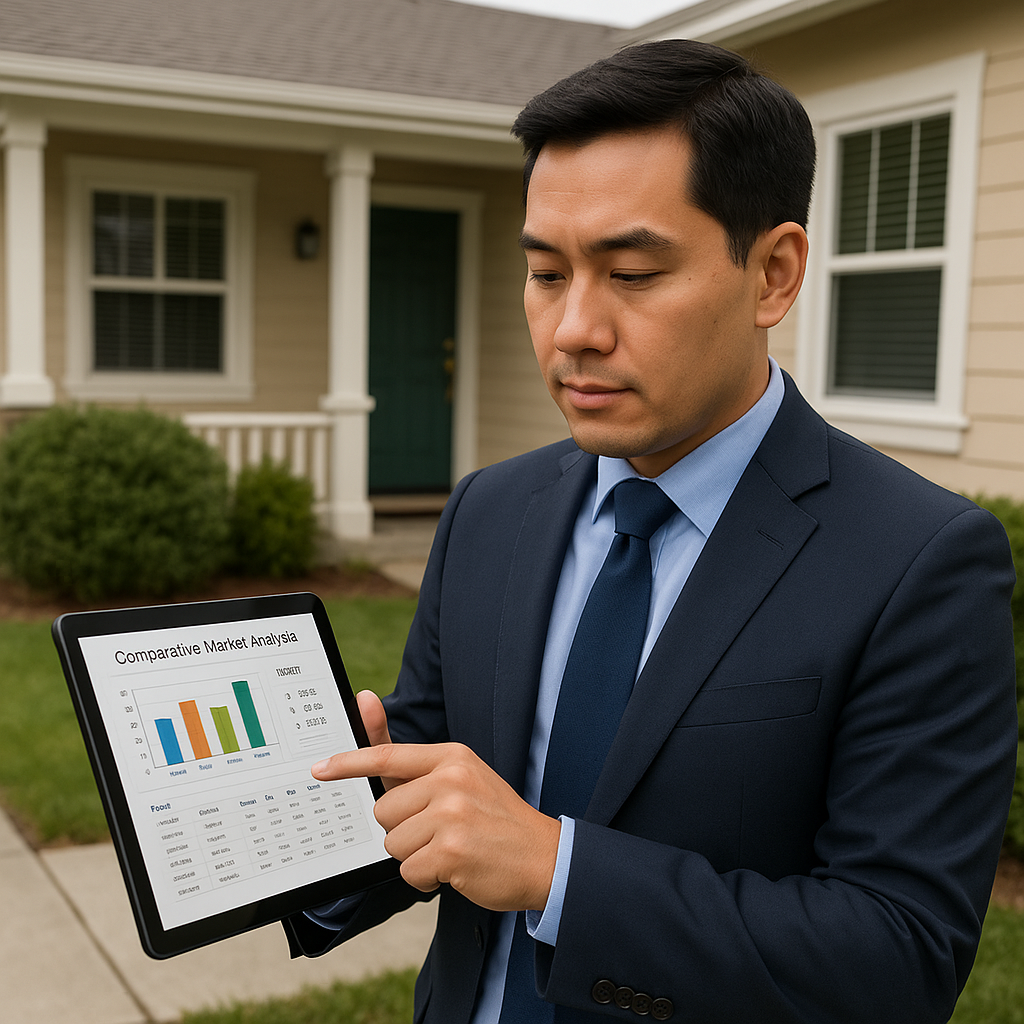
A rigorous comparative market analysis (CMA) forms the analytical foundation for defensible rental pricing decisions. This process extends beyond simple price-per-square-foot calculations to encompass detailed evaluation of comparable properties across multiple dimensions including location specificity, property condition, amenity packages, lease terms, and recent rental transaction data. Sacramento property owners must identify truly comparable properties—those within the same submarket, with similar bedroom and bathroom configurations, comparable age and condition, and equivalent amenity profiles—to establish meaningful pricing benchmarks.
The CMA methodology should incorporate both active listings and recently leased properties to capture current market sentiment and actual transaction prices. Active listings reveal competitive positioning and landlord pricing strategies, while recently executed leases provide validated market pricing data that reflects tenant willingness to pay. Analyzing the spread between initial asking rents and final lease rates offers valuable insights into market pricing elasticity and negotiation dynamics. Property managers should document rental concessions, lease incentives, and non-standard terms that may affect effective rental rates, as these factors significantly impact true rental income and return on investment calculations.
Geographic precision in comparative analysis is essential for accurate pricing in Sacramento's diverse neighborhood landscape. Rental rates can vary substantially across relatively short distances based on school district boundaries, proximity to employment centers, neighborhood amenities, and perceived safety factors. Effective CMAs segment the market into appropriate geographic units—often at the ZIP code or neighborhood level—and apply location-specific adjustments to account for micro-market variations. Property owners should maintain ongoing CMA databases that track rental rate movements over time, enabling identification of pricing trends and optimal timing for rental rate adjustments that minimize tenant turnover while capturing market appreciation.
Balancing Competitive Positioning With Revenue Optimization
Strategic rental pricing requires balancing competitive market positioning against revenue optimization objectives to achieve optimal financial performance. Pricing at the top of the market range may maximize per-unit revenue but extends average vacancy periods and increases tenant acquisition costs, potentially reducing overall return on investment. Conversely, aggressive discount pricing minimizes vacancy loss but leaves rental income on the table and may attract lower-quality tenant pools that increase turnover risk and maintenance expenses. The optimal pricing strategy identifies the equilibrium point where rental rate, vacancy duration, and tenant quality converge to maximize long-term portfolio performance.
Quantitative analysis of the vacancy cost versus rental premium tradeoff provides objective guidance for pricing decisions. Each additional week of vacancy represents lost revenue that cannot be recovered, creating an opportunity cost that must be weighed against incremental rental income from higher pricing. For example, if a property could lease at $2,000 per month within two weeks or at $2,100 per month within six weeks, the four-week vacancy extension costs $2,000 in lost income while generating only $1,200 in additional annual revenue ($100 monthly increase over twelve months). This analysis demonstrates that aggressive pricing that extends vacancy periods often destroys value rather than optimizing returns.
Revenue optimization extends beyond initial lease pricing to encompass lease renewal strategies, rental escalation provisions, and portfolio-level pricing coordination. Property owners managing multiple units should implement differentiated pricing strategies that account for unit-specific characteristics, current occupancy status, and tenant retention priorities. High-quality existing tenants with strong payment histories and low maintenance requirements justify more conservative renewal increases that prioritize retention over maximum rate capture. Vacant units or those housing problematic tenants present opportunities for more aggressive market-rate repositioning. This nuanced approach to pricing across the portfolio lifecycle maximizes aggregate revenue while minimizing the vacancy loss and tenant turnover that erode profitability in Sacramento's competitive rental market.
Leveraging Property Features and Amenities in Your Pricing Strategy
Property-specific features and amenities represent tangible value differentiators that justify premium pricing and enhance competitive positioning in the Sacramento rental market. Systematic quantification of amenity value enables property owners to establish defensible pricing premiums that reflect actual tenant willingness to pay for specific features. High-value amenities typically include in-unit laundry facilities, updated kitchens with modern appliances, central air conditioning, garage or covered parking, outdoor living spaces, and smart home technology integration. Each amenity commands measurable rent premiums that vary based on property type, location, and tenant demographics.
Market research consistently demonstrates that certain property improvements generate disproportionate returns through rental rate premiums and reduced vacancy periods. Updated kitchens and bathrooms typically command 8-12% rental premiums compared to properties with original fixtures, while in-unit laundry can justify 5-8% increases in markets where this amenity is not standard. Energy-efficient features including programmable thermostats, LED lighting, and high-efficiency HVAC systems appeal to cost-conscious tenants and support premium positioning. Property owners should conduct amenity-specific comparative analysis to quantify the rental premiums that specific improvements command in their target submarket, enabling data-driven capital improvement decisions that maximize return on investment.
Beyond physical amenities, service-oriented differentiators including responsive maintenance, professional property management, online rent payment systems, and tenant communication platforms create value that supports premium pricing strategies. Sacramento tenants increasingly prioritize landlord responsiveness and management professionalism when making rental decisions, particularly among higher-income demographic segments. Property owners who invest in proactive maintenance programs, technology-enabled tenant services, and professional management infrastructure can justify rental premiums of 3-7% compared to comparable properties with reactive management approaches. These service differentiators also enhance tenant retention, reducing the vacancy loss and turnover costs that significantly impact portfolio-level financial performance. Strategic emphasis on both physical amenities and management service quality creates comprehensive value propositions that optimize rental income while maintaining high occupancy rates in competitive market conditions.
Implementing Dynamic Pricing Adjustments to Minimize Vacancy Loss
Dynamic pricing strategies enable property owners to respond to real-time market conditions, seasonal demand fluctuations, and property-specific circumstances to minimize vacancy loss while optimizing rental revenue. Unlike static annual pricing reviews, dynamic approaches incorporate continuous market monitoring, systematic pricing adjustments based on vacancy duration, and strategic use of lease incentives to accelerate tenant placement during challenging market periods. This methodology, adapted from revenue management practices in hospitality and commercial real estate sectors, recognizes that optimal pricing varies based on current market conditions, competitive supply, and time-sensitive vacancy costs.
Implementation of dynamic pricing requires establishing decision rules that trigger pricing adjustments based on objective criteria. Properties that remain vacant beyond predetermined timeframes—typically 14-21 days in the Sacramento market—should undergo systematic pricing review and potential adjustment. A structured approach might include 3-5% price reductions after three weeks of vacancy, with additional adjustments at subsequent intervals if market response remains insufficient. This systematic approach prevents emotional pricing decisions while ensuring that vacancy costs do not accumulate unnecessarily. Property owners should track pricing adjustment effectiveness, documenting the relationship between price changes and tenant inquiry volume to refine their adjustment algorithms over time.
Strategic deployment of lease incentives provides an alternative to direct price reductions that can preserve long-term rental rate positioning while accelerating initial occupancy. Incentives including first-month rent concessions, reduced security deposits, or utility allowances reduce effective first-year rental costs without establishing lower base rents that constrain future renewal increases. This approach proves particularly effective during seasonal soft periods or when competing against new construction properties offering aggressive move-in specials. Property managers should calculate the net present value of incentive packages compared to rental rate reductions, selecting the approach that optimizes lifetime tenant value while minimizing vacancy duration. The integration of dynamic pricing methodologies with comprehensive market analysis and property-specific value positioning creates a sophisticated rental pricing framework that maximizes return on investment while minimizing the vacancy loss that erodes profitability in Sacramento's evolving rental market.
This content is for informational and educational purposes only. It does not constitute an offer or solicitation to buy or sell any security or investment product. Past performance and market trends do not guarantee future results. Consult a licensed financial advisor before making investment decisions. All Inclusive Realty Group, Inc. DRE #02005619.