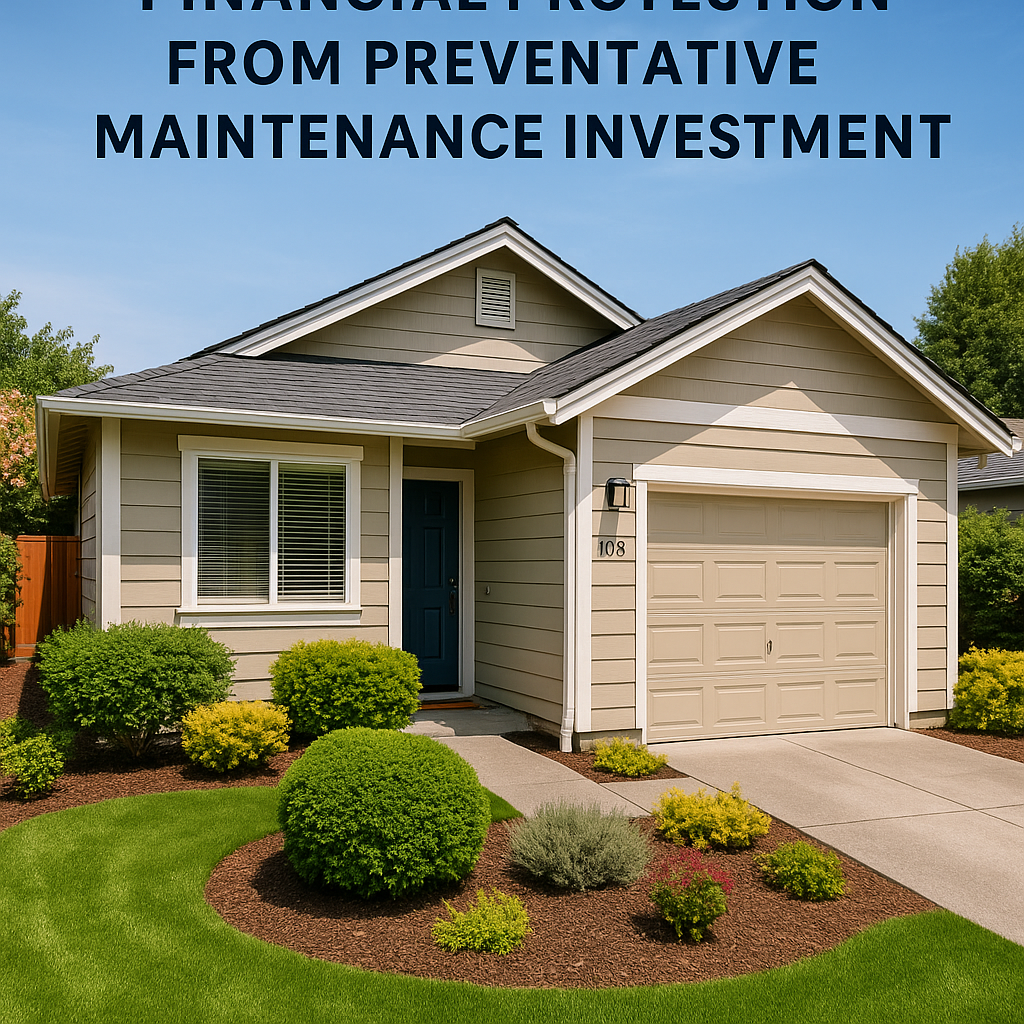
Proactive maintenance strategies can reduce operating costs by up to 30% while simultaneously increasing tenant retention and protecting your rental property investment returns.
The Financial Impact of Deferred Maintenance on Rental Income
Deferred maintenance represents one of the most significant threats to rental property profitability, creating a cascading effect that erodes both immediate cash flow and long-term asset value. When property owners postpone necessary repairs and routine upkeep, seemingly minor issues compound into major capital expenditures that can devastate operating budgets. A small roof leak left unaddressed can lead to structural damage, mold remediation costs, and tenant displacement—expenses that far exceed the cost of preventative roof inspections and timely repairs. Sacramento property investors who defer maintenance face average emergency repair costs that are 3-5 times higher than proactive maintenance investments, directly impacting net operating income and portfolio performance metrics.
The financial ramifications extend beyond immediate repair costs to encompass vacancy loss, reduced rental rates, and diminished property valuations. Tenants increasingly prioritize well-maintained properties, and visible signs of neglect—such as deteriorating landscaping, malfunctioning HVAC systems, or outdated fixtures—provide justification for rent reduction requests or lease non-renewals. Properties with deferred maintenance typically experience 15-20% longer vacancy periods compared to well-maintained comparables, as prospective tenants perceive higher risk and lower quality. Furthermore, appraisers and potential buyers recognize deferred maintenance as a significant liability, resulting in lower capitalization rates and reduced sale prices when investors seek to divest assets.
From a financial reporting perspective, deferred maintenance creates balance sheet vulnerabilities that sophisticated investors and lenders scrutinize carefully. Accumulated maintenance liabilities reduce equity positions and can trigger covenant violations in leveraged portfolios. Property managers serving Sacramento landlords must implement comprehensive maintenance tracking systems that quantify deferred maintenance exposure and model the projected financial impact on cash flow projections. This analytical approach enables data-driven decision-making regarding capital allocation and helps property owners understand the true cost of postponing necessary maintenance—a cost that invariably exceeds the investment required for timely preventative measures.
Strategic Maintenance Scheduling to Minimize Vacancy Loss
Strategic maintenance scheduling represents a critical operational competency that directly influences vacancy rates and rental income continuity. Property managers who implement systematic maintenance calendars can coordinate necessary repairs and upgrades during planned turnover periods, thereby eliminating the need for mid-lease disruptions that frustrate tenants and create additional vacancy exposure. By conducting comprehensive property assessments 60-90 days prior to lease expiration, management teams can identify maintenance requirements, procure materials, and schedule contractors to execute work immediately upon tenant departure. This approach compresses turnover timelines from an industry average of 30-45 days to 14-21 days in well-managed Sacramento rental properties, significantly reducing vacancy loss and maximizing annual rental income.
Preventative maintenance scheduling also enables property managers to leverage seasonal pricing advantages and contractor availability cycles. HVAC system servicing scheduled during shoulder seasons (spring and fall) typically costs 15-25% less than emergency repairs during peak summer or winter demand periods. Similarly, exterior painting, roof maintenance, and landscaping projects executed during optimal weather windows reduce labor costs and improve work quality. Sacramento property investors who partner with management companies employing strategic maintenance scheduling benefit from reduced operating expenses while simultaneously maintaining property condition standards that support premium rental rates and tenant retention.
Advanced maintenance scheduling incorporates predictive analytics and asset lifecycle management principles to optimize capital expenditure timing and minimize unexpected failures. By tracking equipment age, maintenance history, and manufacturer specifications, property managers can anticipate component replacement requirements and budget accordingly. For example, water heaters typically require replacement every 10-12 years, while HVAC systems have 15-20 year lifecycles. Proactive replacement scheduling—replacing equipment at 80-85% of expected useful life—prevents emergency failures that necessitate expedited contractor rates, tenant relocation costs, and potential liability for property damage. This strategic approach transforms maintenance from a reactive cost center into a proactive profit protection mechanism that enhances portfolio performance and investor returns.
How Preventative Maintenance Drives Tenant Retention and Reduces Turnover Costs
Tenant retention represents the single most impactful factor in rental property profitability, and preventative maintenance serves as the foundation for long-term tenancy relationships. Industry research consistently demonstrates that responsive, proactive maintenance management ranks among the top three factors influencing tenant satisfaction and lease renewal decisions. When property management teams address maintenance requests promptly and conduct regular preventative inspections, tenants perceive higher property value and develop stronger loyalty to both the property and management company. Sacramento rental properties with comprehensive preventative maintenance programs achieve tenant retention rates of 75-85%, compared to 50-60% retention in reactively managed properties—a differential that translates to substantial cost savings and income stability.
The financial impact of improved tenant retention through preventative maintenance becomes evident when analyzing turnover costs comprehensively. Each tenant turnover event incurs multiple expense categories: vacancy loss during the turnover period (typically 3-6 weeks of rental income), marketing and leasing costs (5-8% of annual rent), turnover maintenance and cleaning (8-12% of annual rent), and administrative processing expenses. For a Sacramento rental property generating $2,500 monthly rent, a single turnover event costs $4,000-$6,000 in direct expenses and lost income. Properties with annual turnover rates of 40-50% face substantially higher operating costs compared to properties achieving 15-20% turnover through proactive tenant retention strategies centered on preventative maintenance excellence.
Beyond quantifiable cost savings, preventative maintenance programs enhance tenant quality and reduce operational friction throughout the tenancy lifecycle. Long-term tenants who experience consistent property upkeep develop pride of occupancy, resulting in better property care, timely rent payments, and reduced lease violation incidents. These tenants also provide stable cash flow that enables property owners to secure favorable financing terms and plan capital improvements strategically. Property managers serving Sacramento investors should implement tenant satisfaction surveys that specifically assess maintenance responsiveness and property condition, using this feedback to refine preventative maintenance protocols and demonstrate the direct correlation between proactive maintenance investment and tenant retention outcomes that protect and enhance rental profit margins.
Cost-Benefit Analysis: Preventative Maintenance Versus Emergency Repairs
Rigorous cost-benefit analysis consistently demonstrates that preventative maintenance delivers superior financial returns compared to reactive emergency repair strategies. Preventative maintenance activities—including HVAC filter replacements, plumbing inspections, roof assessments, and appliance servicing—typically cost $100-$300 per occurrence and can be scheduled during normal business hours at standard contractor rates. In contrast, emergency repairs necessitated by equipment failures often require after-hours service calls, expedited parts procurement, and premium labor rates that increase costs by 150-300%. A preventative HVAC maintenance contract costing $200 annually can prevent a $1,500-$2,500 emergency compressor replacement, representing a return on investment exceeding 700% while eliminating tenant disruption and potential liability exposure.
The financial modeling becomes even more compelling when incorporating secondary costs associated with emergency repairs. Equipment failures that occur during tenant occupancy may render properties uninhabitable, triggering rent abatement obligations, temporary relocation expenses, and potential lease termination scenarios that compound financial losses. Water heater failures, for example, not only require emergency replacement costs but may also cause water damage to flooring, cabinetry, and tenant belongings—exposing property owners to insurance claims, deductibles, and premium increases. Sacramento property investors who implement comprehensive preventative maintenance programs reduce emergency repair incidents by 60-75%, translating to annual operating cost reductions of 20-30% while simultaneously improving tenant satisfaction metrics that support rent growth and occupancy stability.
Sophisticated property management companies employ total cost of ownership (TCO) analysis to evaluate maintenance strategies and optimize resource allocation. TCO calculations incorporate direct maintenance costs, energy efficiency impacts, equipment longevity, tenant retention effects, and property valuation implications to provide comprehensive financial assessments. This analytical framework reveals that preventative maintenance investments generate compounding returns through extended asset lifecycles, reduced replacement frequency, lower utility costs from efficient equipment operation, and premium valuations from well-maintained property conditions. For Sacramento rental property portfolios, systematic preventative maintenance programs typically deliver internal rates of return (IRR) of 25-40% when all cost factors and income protection benefits are properly quantified—substantially exceeding returns from most alternative capital allocation strategies available to real estate investors.
Building a Proactive Maintenance Program for Sacramento Rental Properties
Establishing a comprehensive proactive maintenance program requires systematic planning, documented protocols, and technology infrastructure that enables consistent execution across property portfolios. The foundation begins with detailed property assessments that catalog all building systems, equipment specifications, installation dates, and manufacturer maintenance requirements. Sacramento property managers should develop property-specific maintenance schedules that address seasonal considerations unique to the region—including HVAC system preparation for summer heat extremes, gutter cleaning before winter rainfall, and irrigation system winterization. These schedules should be integrated into property management software platforms that generate automated work orders, track completion status, and maintain comprehensive maintenance histories that support asset lifecycle management and inform capital planning decisions.
Vendor relationship management constitutes a critical component of successful proactive maintenance programs. Property managers should establish preferred vendor networks comprising licensed, insured contractors who demonstrate reliability, quality workmanship, and competitive pricing. Negotiating annual service contracts for HVAC maintenance, pest control, landscaping, and pool service typically reduces per-occurrence costs by 15-25% while ensuring priority scheduling and consistent service quality. For Sacramento rental properties, preferred vendor relationships also facilitate rapid response during the occasional emergency situations that arise despite preventative measures, minimizing tenant disruption and controlling costs. Property managers should conduct annual vendor performance reviews that assess response times, work quality, pricing competitiveness, and tenant feedback to continuously optimize vendor partnerships.
Technology integration and data analytics represent the future of proactive maintenance management, enabling predictive maintenance strategies that further reduce costs and enhance property performance. Internet-connected devices such as smart thermostats, water leak detectors, and HVAC monitoring systems provide real-time alerts regarding equipment performance anomalies, enabling intervention before failures occur. Property management platforms equipped with maintenance analytics can identify patterns across portfolios—such as recurring plumbing issues in specific property types or HVAC inefficiencies correlated with equipment age—that inform strategic capital improvement investments. Sacramento property investors who partner with management companies employing these advanced maintenance technologies benefit from reduced operating expenses, extended asset lifecycles, superior tenant experiences, and enhanced property valuations that collectively protect and maximize rental profit margins in increasingly competitive investment markets.
This content is for informational and educational purposes only. It does not constitute an offer or solicitation to buy or sell any security or investment product. Past performance and market trends do not guarantee future results. Consult a licensed financial advisor before making investment decisions. All Inclusive Realty Group, Inc. DRE #02005619.