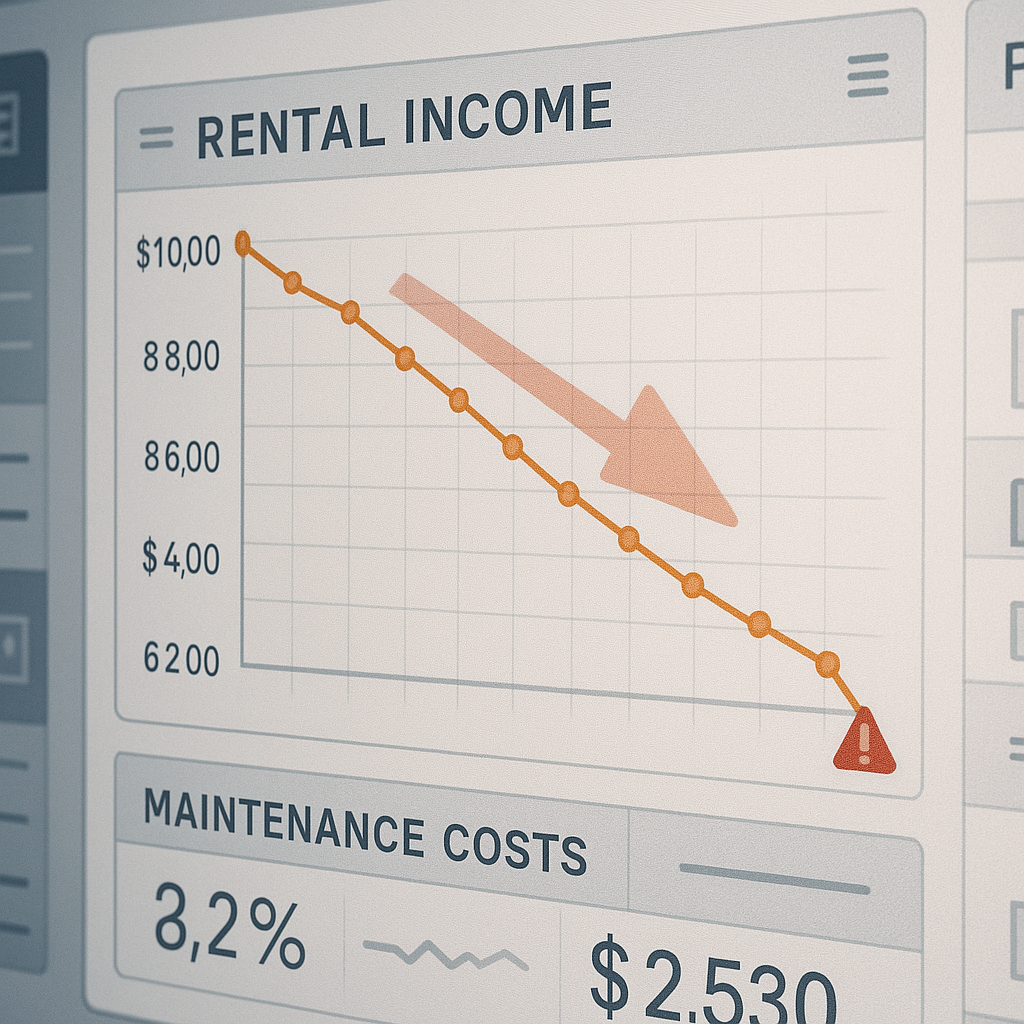
Discover the hidden revenue drains silently eroding your rental property returns and learn how to identify these costly blind spots before they impact your bottom line.
Undetected Vacancy Loss Between Tenant Transitions
Vacancy loss represents one of the most significant yet frequently underestimated revenue drains in rental property portfolios. While property owners typically account for standard turnover periods, the actual income loss often extends well beyond anticipated timeframes due to inadequate transition planning and inefficient marketing processes. Each additional day a unit remains vacant directly reduces annual net operating income and diminishes overall portfolio performance metrics.
The financial impact compounds when property managers fail to implement proactive leasing strategies during tenant notice periods. Industry data indicates that properties without pre-marketing protocols experience vacancy periods averaging 30-45 days, compared to 14-21 days for properties utilizing strategic tenant transition management. This differential translates to approximately 2-4% of annual gross rental income lost unnecessarily—a substantial margin erosion that directly affects capitalization rates and property valuations.
Effective vacancy mitigation requires systematic processes including immediate listing upon notice, professional photography and staging during occupancy, coordinated showing schedules, and streamlined application processing. Property managers employing technology-enabled tenant placement systems consistently demonstrate superior vacancy performance, reducing time-to-lease by up to 40% compared to traditional methods. For Sacramento rental property investors managing multiple units, these operational efficiencies represent the difference between market-rate returns and underperforming assets that fail to meet investment objectives.
Deferred Maintenance Compounds Into Capital Expenditures
Deferred maintenance represents a progressive financial liability that transforms routine operational expenses into substantial capital expenditures when left unaddressed. Property owners frequently underestimate the exponential cost escalation associated with postponed repairs, viewing maintenance deferral as a short-term cost management strategy. However, this approach fundamentally misunderstands the compounding nature of property deterioration and its impact on both immediate cash flow and long-term asset value.
Minor maintenance issues—such as small roof leaks, HVAC inefficiencies, or plumbing deterioration—typically require modest investment when addressed promptly. When deferred, these same issues cascade into structural damage, complete system failures, and emergency repairs costing 300-500% more than preventive maintenance would have required. Additionally, deferred maintenance directly impacts tenant retention rates, as property condition remains a primary factor in lease renewal decisions. Properties with visible maintenance backlogs experience tenant turnover rates 25-35% higher than well-maintained comparable units.
A proactive maintenance strategy incorporating regular property inspections, preventive maintenance schedules, and capital reserve planning protects both immediate rental income and long-term property values. Sacramento property investors implementing systematic maintenance protocols report 15-20% lower annual maintenance expenditures compared to reactive maintenance approaches, while simultaneously achieving higher tenant satisfaction scores and improved lease renewal rates. This operational discipline directly enhances net operating income and positions properties for optimal performance during disposition or refinancing events.
Below-Market Rent Adjustments Erode Portfolio Performance
Rental rate optimization represents a critical yet frequently neglected component of property management that directly impacts portfolio-level financial performance. Many property owners maintain static rental rates for extended periods, failing to implement systematic market analysis and strategic rent adjustments aligned with current market conditions. This passive approach to rental pricing results in cumulative income loss that compounds annually, creating substantial performance gaps between actual and potential gross rental income.
Market rental rates in dynamic real estate markets like Sacramento fluctuate based on supply-demand dynamics, economic conditions, and neighborhood development patterns. Properties with rental rates lagging market comparables by even 5-7% experience annual income shortfalls of $600-$1,200 per unit—a differential that significantly impacts cash-on-cash returns and overall investment performance. Over a typical hold period, this underpricing can represent tens of thousands of dollars in foregone revenue per property, directly reducing equity accumulation and limiting portfolio expansion capacity.
Effective rental rate management requires quarterly comparative market analysis, strategic lease renewal timing, and data-driven pricing decisions that balance income optimization with tenant retention objectives. Property managers utilizing market intelligence platforms and rental analytics tools consistently achieve rental rates 3-6% above market averages while maintaining competitive tenant retention rates. For portfolio managers overseeing multiple properties, this systematic approach to rental pricing represents a foundational strategy for maximizing rental income and achieving superior risk-adjusted returns across diverse market cycles.
Inefficient Lease Terms That Shift Costs to Owners
Lease structure and term allocation fundamentally determine the distribution of operational costs and financial risk between property owners and tenants. Poorly constructed lease agreements frequently contain provisions that inadvertently shift variable expenses, maintenance responsibilities, and utility costs to owners—creating ongoing financial obligations that erode net operating income throughout the lease term. These structural inefficiencies often remain undetected until comprehensive portfolio analysis reveals systematic income underperformance relative to market benchmarks.
Common lease deficiencies include inadequate utility cost allocation, vague maintenance responsibility definitions, insufficient late payment penalties, and renewal terms that limit rent adjustment flexibility. Properties operating under suboptimal lease structures typically experience 8-12% higher owner-borne operational expenses compared to properties with strategically structured lease agreements. Additionally, ambiguous lease language regarding property access, maintenance standards, and tenant obligations creates enforcement challenges that generate additional administrative costs and potential legal exposure.
Optimizing lease terms requires comprehensive legal review, market-appropriate cost allocation provisions, clear maintenance responsibility matrices, and strategic renewal clauses that preserve pricing flexibility while incentivizing tenant retention. Sacramento landlords implementing standardized, attorney-reviewed lease templates with explicit cost-sharing provisions report significantly improved net operating margins and reduced tenant disputes. For property managers overseeing diverse portfolios, lease optimization represents a high-impact operational improvement that enhances financial performance without requiring capital investment or property modifications.
Operational Inefficiencies That Inflate Management Expenses
Property management operational efficiency directly impacts the cost structure and profitability of rental property investments. Inefficient administrative processes, redundant workflows, and outdated management systems generate unnecessary expenses that accumulate across portfolio operations—reducing net operating income and diminishing overall investment returns. Many property owners overlook these operational cost drivers, focusing exclusively on revenue optimization while accepting inflated management expenses as unavoidable operational overhead.
Common operational inefficiencies include manual rent collection processes, paper-based maintenance request systems, inefficient vendor coordination, and inadequate financial reporting infrastructure. Properties managed through legacy operational frameworks typically incur management expenses 15-25% higher than comparable properties utilizing integrated property management technology platforms. These excess costs manifest across multiple operational categories including administrative labor, payment processing fees, maintenance coordination inefficiencies, and delayed financial reporting that impairs decision-making capabilities.
Technology-enabled property management systems offer substantial cost reduction opportunities through automated rent collection, digital maintenance workflows, centralized vendor management, and real-time financial reporting. Sacramento property investors partnering with property management firms employing comprehensive technology integration report management expense ratios 200-300 basis points lower than industry averages, while simultaneously achieving superior tenant satisfaction metrics and reduced vacancy rates. This operational excellence creates competitive advantages in tenant retention, cost management, and portfolio scalability—positioning properties for optimal performance across varying market conditions and investment horizons.
This content is for informational and educational purposes only. It does not constitute an offer or solicitation to buy or sell any security or investment product. Past performance and market trends do not guarantee future results. Consult a licensed financial advisor before making investment decisions. All Inclusive Realty Group, Inc. DRE #02005619.